At the 2025 meeting of the Psychology and the Other conference here in Boston, I will present a paper titled “We Have Never Been Therapeutic: Quaker Faith and the Birth of the Asylum”. The paper takes a genealogical view of the origins of the therapeutic ethos by bringing together two threads of inquiry, one historical, one theological. On the one hand, I consider of the role of the York Retreat, founded by Quakers in 1792, which is credited by historians for establishing the basis for a humane psychiatry and ultimately therapy itself as a curative technique. On the other hand, I argue that the Quaker humanism that structured treatment at the York Retreat was itself grounded in a Reformation theology of mortification and mysticism in which Christian love plays a central role. So, my case is that the origins of the therapeutic are tied up with a Quaker adaptation of agape, or Christian love, and of the ecstatic element of that love, which imagines transformation through self-abandonment.
New Article: Opening Up and Going In: Metaphors of Interiority and the Case of Humanistic Psychology.
2 OctThis just published in Historical Social Research: 49.3 – Debating Self-Optimisation
Sam Binkley: Opening Up and Going In: Metaphors of Interiority and the Case of Humanistic Psychology. [Abstract]
This article considers the recurrence of metaphorical representations of psychological interiority in contemporary therapeutic discourse. Such metaphors of interiority, it is argued, help to explain not just the popularity and cultural meanings of therapeutic discourses, but the continuities and ruptures between distinct therapeutic sensibilities over time. Specifically, metaphors of interiority help us understand the relationship between an older, humanistic paradigm wherein interiority forms a problem of self-knowledge, authenticity and interpretation, and a newer, a neoliberal, paradigm in which interiority becomes a framework for exploitation and optimization of subjective capacities. The break, but also the continuity between these two sensibilities comes into focus as they are read through the spatial relations implied by a metaphor of interiority. Toward this end, this study attempts two related engagements, the first conceptual and the second historical. First, through a consideration of Conceptual Metaphor Theory and specifically the works of Lakoff and Johnson, metaphors of interiority lend a unique somatic and spatial feel to therapeutic practices. This spatial feeling helps to explain the agential sense that therapeutic subjects express as they pursue states of psychic health by traversing interior space, or in “opening up” and “going in.” The second half of this article applies these concepts to a cultural-historical case. The humanistic psychology movement of the 1960s and 1970s is examined for the ways in which metaphors of psychic interiority gave meaning and coherence to a specific set of therapeutic practices. In the writings of humanistic psychologists such as Abraham Maslow and Carl Rogers, metaphors of interiority are used to frame psychic interiority as a problem of interpretation and self-understanding. A distinct notion of self-authenticity is fashioned as a problem of knowing or confronting an inner life, although, at the same time, the imperative of interpretation would give way to another emergent paradigm fashioned on optimization, opportunity, and neoliberal entrepreneurship.
download: https://www.gesis.org/en/hsr/current-issues. Or from my academia.edu site.
and there’s this…
3 Apr
“White Panic and the Rhetoric of Exposure: Confronting the Uncanny in our New Racial Times”
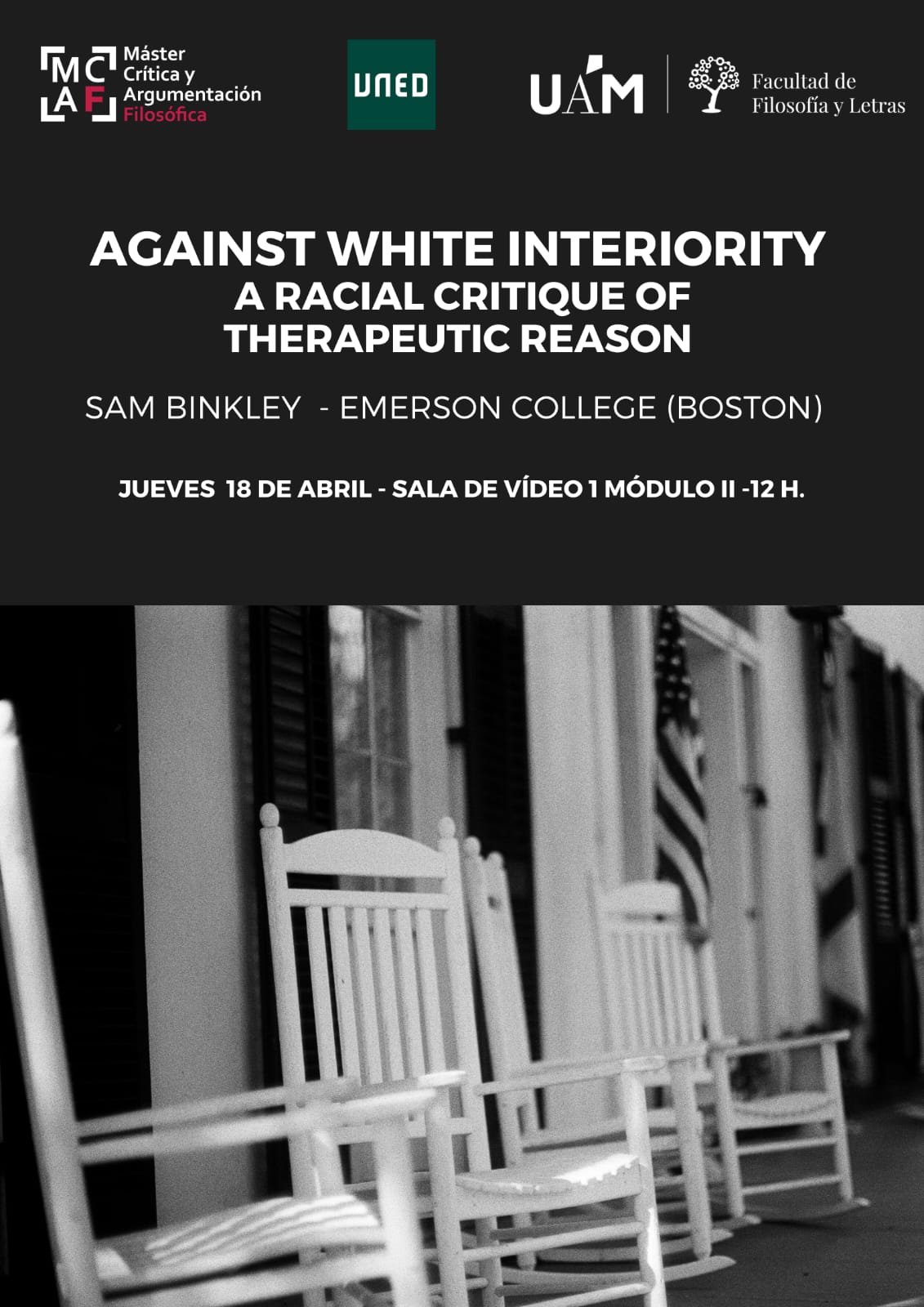
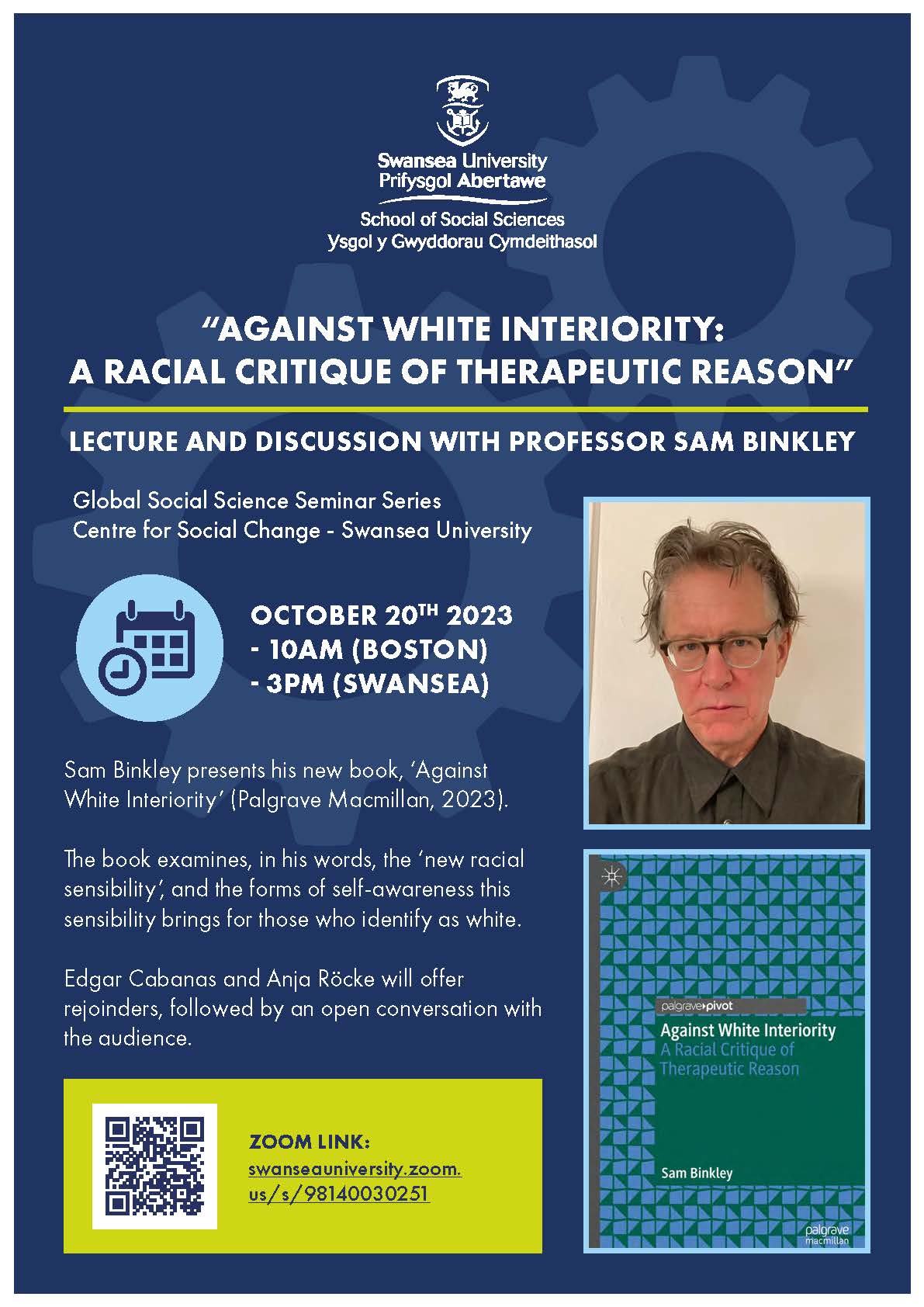
Upcoming presentation at the “psychology and the other” conference (oct 6)
13 SepTherapeutic Culture and the History of Interiority
This presentation builds on an emerging interdisciplinary focus on “therapeutic culture.” Such perspectives consider the increasingly pervasive presence of psychological, therapeutic and emotional rhetorics in public discourse and private life, evidenced in the popularity of self-help books, the establishment of professional norms centered on personal feelings and affect management, and a broader centering of government policy on matters such as happiness, loneliness and other aspects of emotional well being. Specifically, this presentation will consider one powerful theme woven through many of these discourses: the problem of “interiority,” where therapeutic subjectivity is related through the urgent need to “get inside oneself.” Within therapeutic culture, interiority, it is argued, is a theme expressed through rich metaphorical language, though its effect goes beyond the linguist and the emotional, carrying a powerful bodily resonance. Borrowing from recent treatments of metaphor in cognitive and linguistic theory, as well as historical overviews of the popularity of therapeutic sensibilities in the American context, metaphors of interiority are explored in historical cases drawn from a history of popular psychology, extending from the humanistic psychology movement of the 1960’s and 70s to the franchise of publications from the 1990s celebrating the “inner child” motif. Tracing a certain historical trajectory, it is argued that metaphors of interiority have shifted over the course of half a century from an epistemic problem centered on the need to know oneself and others and to breach the interior realm as a problem of understanding and acceptance, to an utilitarian problem centered on interiority as the source of dynamic potential and useful forces. Moreover, it is argued that different framings of interiority lend themselves to varied critical projects: the epistemic problem of interiority animated a powerful cultural movement in the 1960’s and 70’s centered on personal authenticity, alienation and a critique of technocratic society. Later, under neoliberal regimes of psychological knowledge, this same interiority is taken up as a problem of human capital.
Against White Interiority: A Racial Critique of Therapeutic Reason
13 JulNew from Palgrave: July 2023
This book presents a bold critique of the new racial sensibility that has attained global prominence following the police murder of George Floyd. Through a set of managerial and therapeutic discourses, this new sensibility describes the inner racial life of white subjects, inducing them to adopt a therapeutic attitude toward deeply interiorized white emotions and conflicts. In so doing, the new racial sensibility promises to remake whiteness in the image of the self-aware racial ally. However, such an appeal, it is argued, serves the subtle function of the preservation of white racial dispositions, and the reproduction of the very racism it sets out to transform. Adopting a critical lens derived from Michel Foucault’s analysis of sexuality, together with an engagement with sociological, psychoanalytic and phenomenological reflections on shame as a racial affect, a critique of white interiority considers alternative frames through which white anti-racist subjection might be imagined.
Talk at Adam Mickiewicz University of Poznań
4 NovAfter having to cancel this talk last year owing to a skateboarding injury (don’t ask), I’m getting ready to give this talk at Adam Mickiewicz University of Poznań (Poland) on Thanksgiving morning (which apparently isn’t a problem in Poland):
The Self Within: Metaphors of Interiority and Containment in American Therapeutic Culture
This presentation builds on an emerging interdisciplinary focus on what is termed “therapeutic culture.” Such perspectives consider the increasingly pervasive presence of psychological, therapeutic and emotional rhetorics in public discourse and private life, evidenced in the popularity of self-help books, the establishment of professional norms centered on personal feelings and affect management, and a broader centering of government policy on matters such as happiness, loneliness and other aspects of emotional well being. Specifically, this presentation will consider one powerful theme woven through many of these discourses: the problem of “interiority,” where therapeutic subjectivity is related through the urgent need to “get inside oneself.” Interiority, it is argued, is a theme related through rich metaphorical language, though its effect goes beyond the linguist and the emotional, carrying a powerful bodily resonance. Borrowing from recent treatments of metaphor in cognitive and linguistic theory, as well as historical overviews of the popularity of therapeutic sensibilities in the American context, metaphors of interiority are explored in historical cases drawn from the American context, extending from the humanistic psychology movement of the 1960’s and 70s to the franchise of publications from the 1990s celebrating the “inner child” motif. Therapeutic appeals to “inwardness,” are traced from more radical forms in the 1960s to their incorporation as a managerial trope in neoliberal economic times.
Author

Sam Binkley is Professor of Sociology at Emerson College.
 SAM BINKLEY